
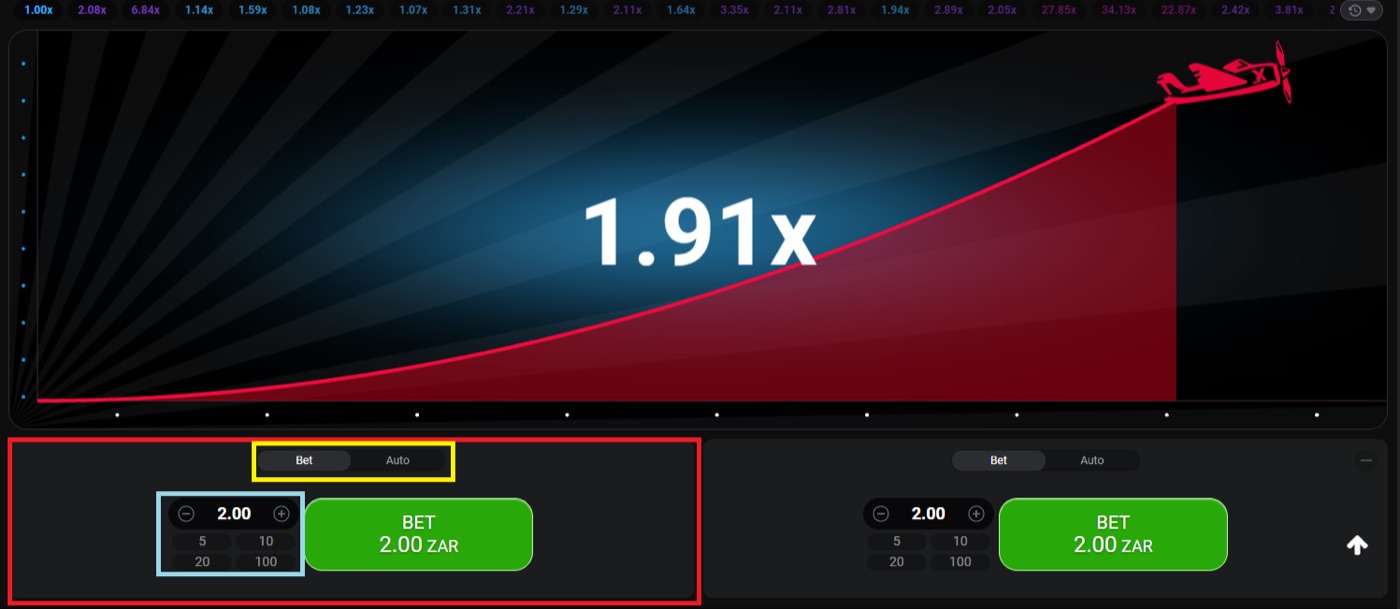
Aviator creates a simple question with a difficult answer: what should a player expect after many rounds? A multiplier rises. The player cashes out or waits. The round ends when the plane crashes.
The long-term answer starts with mathematics. Aviator has a 97% RTP and a 3% house edge. Those figures describe the average result across a large number of bets. They do not predict the next round, the next hour, or one player’s session.
Expected Value Over Time
Aviator has a 97% RTP and a 3% house edge. A $10 stake therefore has an expected loss of $0.30 at any cash-out target.
This is an average, not a promised result. A player can win $10, lose $10, or receive a much larger return in one round. Over many comparable bets, the mathematical expectation moves toward a loss equal to 3% of the total amount staked.
| Stake per bet | Expected loss per bet | Expected loss after 100 bets |
|---|---|---|
| $1 | $0.03 | $3 |
| $10 | $0.30 | $30 |
| $50 | $1.50 | $150 |
The table uses the 3% house edge. It does not show the order of wins and losses. A player might be ahead after 100 bets, especially when a high multiplier appears. Another player might be behind after the same number of bets.
- A $1 stake carries an expected loss of $0.03.
- A $10 stake carries an expected loss of $0.30.
- A $50 stake carries an expected loss of $1.50.
- The expected loss depends on total money staked, not only the number of rounds.
The target multiplier does not remove the edge. Aviator’s expected value is -3% of the stake at every cash-out target. A lower target can produce more frequent wins, while a higher target can produce fewer wins and larger returns. The average percentage remains negative.
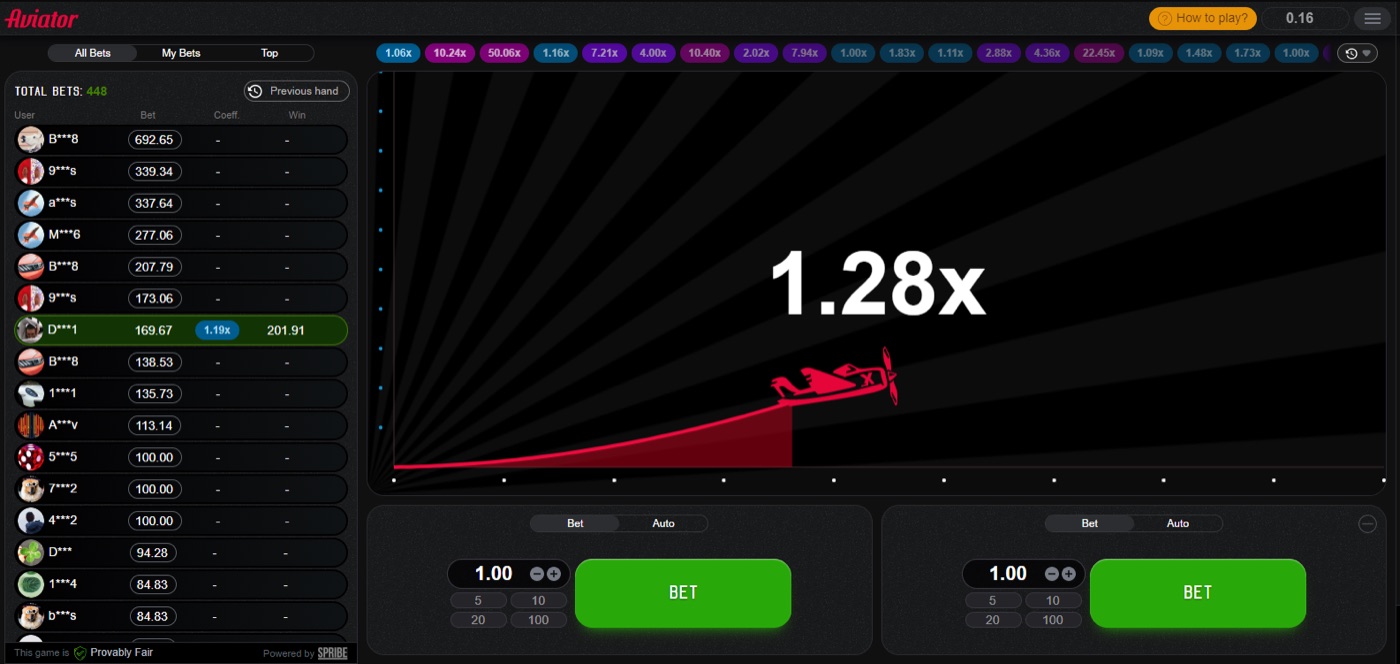
The Aviator plane rises until the round crashes.
Variance Explains Different Results
Aviator rounds last about 8 to 30 seconds. The game is a high-variance crash game because multiplier results can differ sharply from one round to the next.
A player can win several rounds at 1.5x and then lose a stake at 1.00x. Another player can miss those smaller wins and later hit a high multiplier. Both sequences fit the same probability model.
Variance measures how widely actual results can move around the expected average. It explains why the 3% edge may not be visible in a short session. It also explains why two players using the same cash-out target can finish with different balances.
- About 3% of rounds crash instantly at 1.00x.
- A 1.5x target is reached in about 64.7% of rounds.
- A 2x target is reached in about 48.5% of rounds.
- A 10x target is reached in about 9.7% of rounds.
- A 100x target is reached in about 0.97% of rounds.
These percentages do not form a sequence. A round reaching 10x does not make the next round less likely to reach 10x. A run of low multipliers does not create a correction. Each round is independent.
The number of rounds also affects exposure. Aviator offers about 60 to 90 rounds per hour, with only a few seconds between rounds. More rounds can create more opportunities to win, but they also create more opportunities to stake money and experience the house edge.
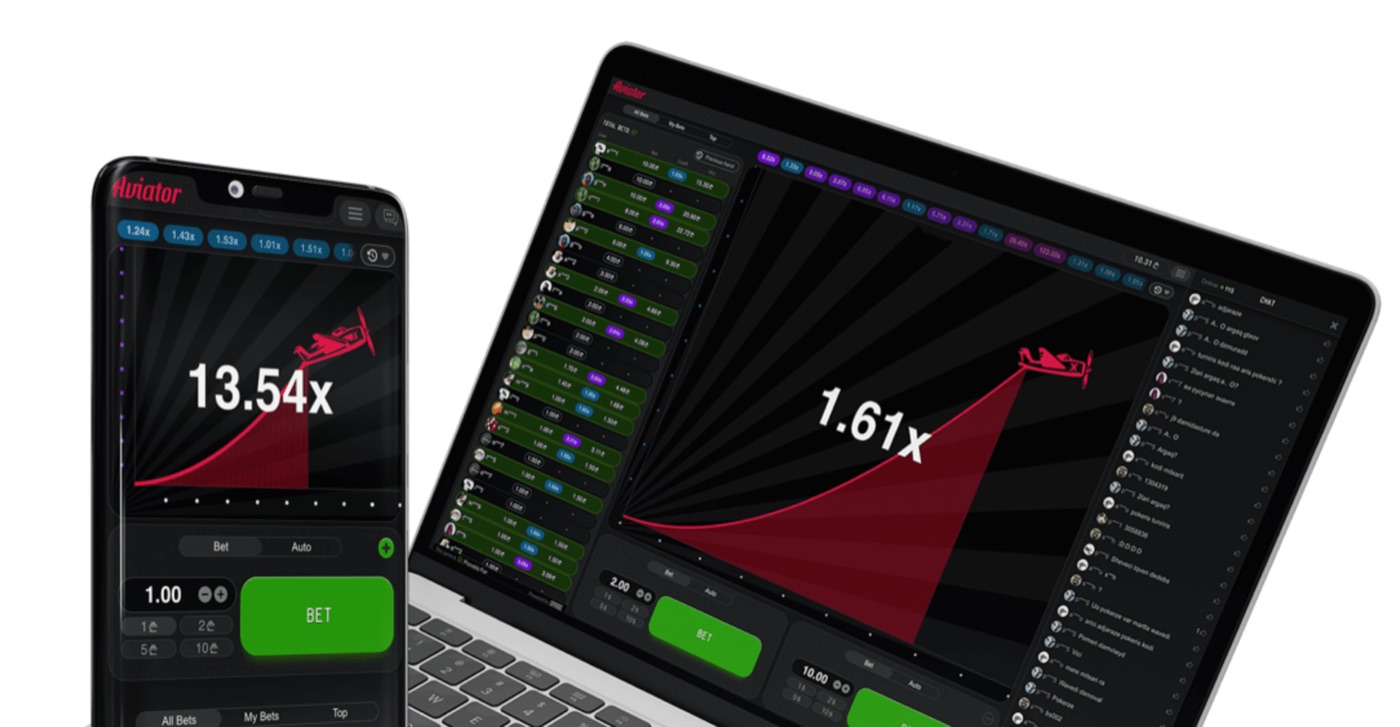
Different screens can show different multipliers in the Aviator interface.
Multiplier Probabilities In Practice
Aviator reaches 1.2x in about 80.8% of rounds. Aviator reaches 5x in about 19.4% of rounds.
The probability formula is 0.97 divided by the target multiplier. This produces the listed chance that a round reaches a particular target. It does not say that a player will win that percentage of personal bets, because timing, stake size and selected cash-out rules affect the individual record.
| Target multiplier | Chance the round reaches it |
|---|---|
| 1.2x | 80.8% |
| 1.5x | 64.7% |
| 2x | 48.5% |
| 3x | 32.3% |
| 5x | 19.4% |
| 10x | 9.7% |
| 20x | 4.85% |
| 50x | 1.94% |
| 100x | 0.97% |
Consider a 2x cash-out. The round reaches 2x about 48.5% of the time. That does not mean 48 or 49 wins will appear in every 100 bets. A real sequence can contain more wins or more losses.
Now consider a 10x cash-out. The target appears less often, but a successful bet pays more before the original stake is accounted for. The lower frequency does not create a better long-term expectation. The 3% edge still applies.
- Choose a target such as 1.5x, 2x or 10x.
- Compare that target with its listed probability.
- Remember that the next round remains independent.
- Separate the chance of reaching the target from the size of the stake.
Aviator’s maximum multiplier is not published by Spribe. Win caps per round are set by each operator. Those limits can affect the largest possible payout, but they do not turn a negative expected value into a positive one.
Strategies And Risk Spread
Aviator provides two bet panels per round. Each panel can use a separate cash-out, so one stake can target 1.5x while another targets 5x.
The two-bet split changes the distribution of results, not the 3% house edge. One bet may cash out earlier while the other waits for a higher multiplier. This can create a different pattern of wins and losses without changing the long-term mathematical disadvantage.
Auto Cash-Out sets a preset multiplier. Auto Bet or Auto Play can run for 10 to 100 rounds, with stop-on-win and stop-on-loss settings. These tools apply instructions automatically. They do not improve the probability of a crash point.
- A 1.5x target wins more often than a 5x target.
- A 5x target wins less often than a 1.5x target.
- A split bet can spread exposure across two targets.
- Auto Play can place bets across 10 to 100 rounds.
- None of these choices removes the 3% edge.
Some guides suggest auto cash-out at 1.5x to 2x, two-bet splits, or stakes below 2% of a bankroll per round. These are risk-management approaches. They are not methods for beating Aviator.
Martingale shows the danger of treating a staking plan as a prediction tool. Doubling after each loss makes the stake reach 1,024 times the base stake after 10 losses. Fibonacci and D’Alembert systems also do not beat the 3% edge.
A player comparing a crash game, multiplier, cash-out or stake may also encounter aviator apk download old version 2022. That search does not change the probability of an Aviator round, and Spribe does not provide a standalone official Aviator app.
Set a spending limit before playing and stop when it is reached. Demo mode can show the interface without registration, but demo results do not change the mathematics of real-money play.
Fairness And Cash-Out Timing
Aviator publishes a SHA-256 hash of the server seed before each round. The crash point is fixed before take-off, and the inputs can be checked after the round with the in-game verification tool.
Player client seeds are combined with the server seed. Neither the operator nor Spribe can change the result after the round starts.
This system explains what provably fair means in Aviator. It does not predict the next crash point. A hash commits the result before the round, but it does not reveal a useful future pattern to a player.
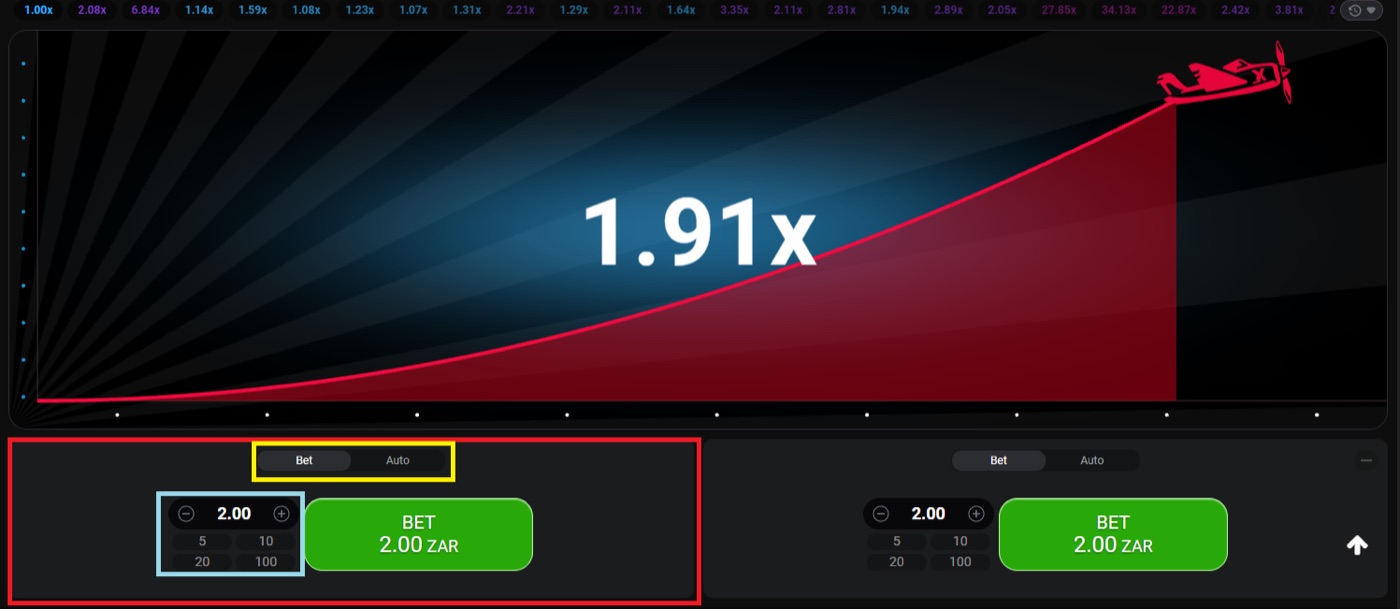
The desktop interface shows a 1.91x round and two bet panels.
Cash-out timing is separate from the expected-value calculation. The cash-out request must reach the server before the crash. A time-out can come from latency or a slow device, according to explanations of player complaints.
- The server publishes a hash before the round.
- The crash point is fixed before take-off.
- The round reveals its inputs after completion.
- The player can check the result with the verification tool.
- A cash-out request must arrive before the crash.
A graph cannot identify a due multiplier. Previous results cannot make the next result safer. Patterns, “best time to play” claims and strategy charts do not alter independent round probabilities.
Long-Term Records And Controls
Aviator’s history panel shows previous multipliers at the top of the game. The live bets panel separates All Bets, My Bets and Top results.
The interface also includes Bet and Auto tabs, typical quick-stake buttons, two bet panels and separate cash-outs. These features help a player record actions, but they do not forecast future outcomes.
A useful long-term record should track money rather than only winning rounds. A player can note the total amount staked, total returned, number of rounds and largest loss. The expected loss is 3% of total stake, while actual results may be far above or below that figure for a long period.
- Record the starting balance.
- Record each stake and each return.
- Separate manual bets from Auto Play bets.
- Count the number of rounds.
- Stop when the planned loss limit is reached.
A bookmaker sets some practical conditions. Typical stakes range from about $0.10 to $100 per bet, depending on the operator. Win caps per round also depend on the operator.
These limits matter to long-term expectations because a player cannot stake or withdraw beyond the conditions applied to the account. They do not change the stated RTP of 97% or the 3% house edge.
Playing more often does not guarantee a result closer to the expected loss during a personal session. Large samples make the average more informative, but variance remains part of the game. A high multiplier can move one record sharply upward, while several instant crashes can move another sharply downward.
Aviator FAQ
Aviator has a 97% RTP and a 3% house edge. Its rounds last about 8 to 30 seconds.
The crash point is fixed before take-off through the provably fair system. The following answers separate mathematical expectation from short-term experience.
Can Aviator be profitable long term?
Aviator has a negative expected value of 3% of the stake at every cash-out target. A player can finish ahead over a short or even extended period, but the mathematical expectation remains negative across many bets.
Does a high multiplier change the house edge?
No. A high multiplier changes how often a target is reached and how large a successful return can be. Aviator still applies a 3% house edge, and the expected value remains -3% of the stake.
Why do two players get different results?
Players can choose different stakes, cash-out targets and timings. Independent rounds also produce different sequences. Variance allows one player to see several wins while another sees losses during the same period.
Can an Aviator predictor know the next crash?
No. The crash point is committed by a hash before the round, and prediction is impossible from previous multipliers. “Signal” bots and pattern claims do not change the independent probabilities.
Is there a standalone Aviator app from Spribe?
No standalone official Aviator app from Spribe exists. Aviator runs inside a licensed operator’s website or app, while third-party apps and APKs described as predictors or clones are not Spribe products.
Why can a cash-out time out?
The cash-out request must reach the server before the crash. Latency or a slow device can cause a time-out, so the displayed request may not complete before the round ends.